
Loading...
Loading...




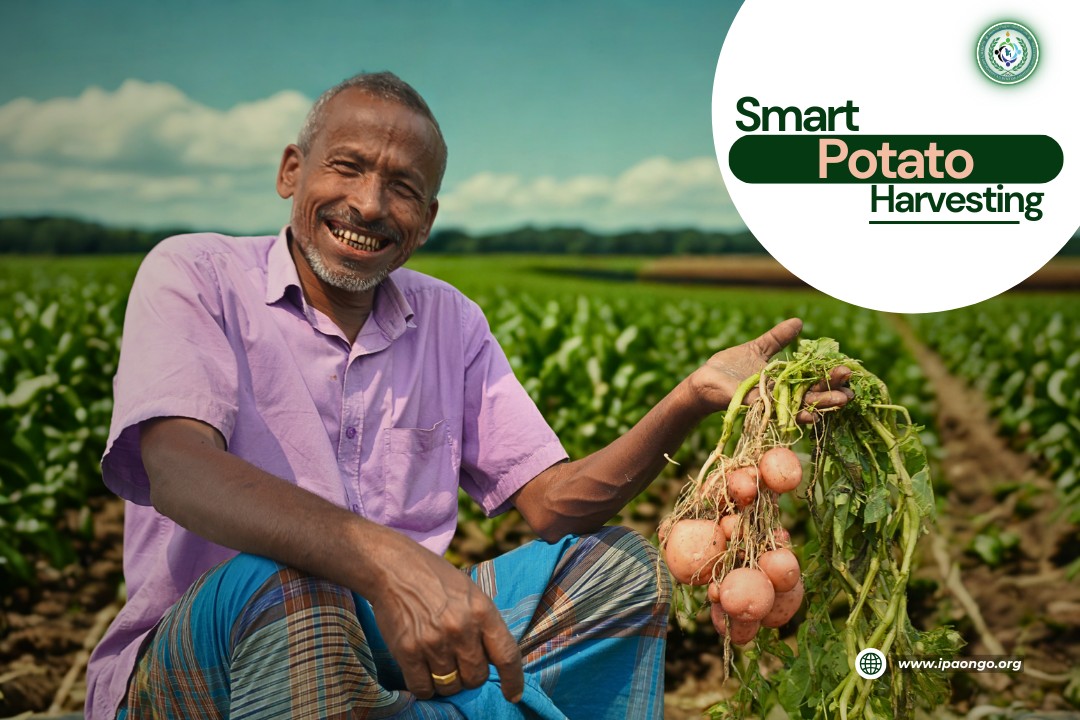
5th May, 2025World Environment Day 2025 reminds us that the health of our planet is in our hands. The UN’s campaign calls for collective action, urging everyone to “adopt sustainable practices that drive systemic change.” In Bangladesh, where farming is the backbone of rural life, this means growing food in ways that also protect soil, water, and climate. Agriculture feeds half the nation and makes Bangladesh the world’s 3rd largest rice producer. But erratic rains, severe floods, and rising soil salinity threaten farmers’ livelihoods and food security. Bangladesh’s smallholder farmers are already showing the way. By embracing smart agriculture—combining new technology with traditional wisdom—they are finding hope amid uncertainty.
For farmers like Abdul
Rashid, the changes have been life-changing. He and his family have farmed
potatoes in Rangpur division for generations.
Abdul recalls the old days: “We were spending a fortune on diesel fuel and water,” he says. “Now, my fields are greener than ever, and I spend 30% less on irrigation.”
Since installing a
solar pump and using compost, he no longer needs costly kerosene and diesel.
His yields have risen while his costs have fallen.
“This year I harvested nearly twice as many potatoes on the same land,” Abdul reports with pride.
His story echoes a
wider pattern—by switching to solar irrigation, farmers across Gaibandha saw production costs drop by about 30%, leaving more income in their pockets and
more food on the table.
Farmers are noticing other benefits too. With sensor-driven watering, Rashid no longer fears dry spells. He can irrigate exactly when needed, avoiding wasted water and reducing strain on his aquifer. And thanks to the organic compost, his fields are bursting with earthworms and microbes—a sign of healthy soil.
Shah Paran, the IPAO project manager overseeing Smart Agri, says the human impact has been profound.
“What excites me most is seeing farmers adopt these methods and thrive,” he explains. “By combining technology and tradition, we’re not just increasing yields—we’re growing resilience in the community and protecting nature for the future.”
He points out
that every solar pump and compost heap also protects the environment. Reduced
diesel use cuts carbon pollution; less synthetic fertilizer means cleaner water
and more biodiversity around the farms.
Shah Paran notes, “This project is proof that innovation can transform lives. When farmers save money and crops do better, everyone gains—and the environment wins too.”
In addition to these
concrete results on the ground, the Smart Potato Harvesting project boosts
farmers’ confidence. Abdul Rashid says he now feels like a partner
in the fight against climate change.
“I’m proud that our farm is part of the solution,” he says. “We used to feel at nature’s mercy, but now I know we’re steering our own course.”
📍Rangpur, Bangladesh
Words by       Rayhan Rafi
Proofread by  IPAO Communications Team


